A blog providing ideas and resources for those teachers hoping to / preparing to teach the new GCSE Specification, first announced in April 2022, for potential first teaching from 2027, depending on a number of factors.
Following my suggestion of a collection of postbox toppers, I have another suggestion for a collection of representations of nature: on stained glass windows in churches.
These are likely to be in some of the modern manifestations of this art form perhaps.
The idea came from this window which I saw at the weekend in Wentworth Church in South Yorkshire.
I love the deer and trees on this window.
Image: Alan Parkinson - shared on Flickr under CC license
The three main approaches to environmentalism - the technological, the cognitive, and the behavioural - are failing. A fourth approach is, however, emerging. In this talk, Morgan Phillips looks at environmentalism through the lens of individualism.
He explores why efforts to tackle the climate and nature crisis, might need to root themselves in efforts to counter the 'hyper' version of individualism that now prevails. This is what the emergent fourth approach to environmentalism is starting to do. It is part of a wider, and growing, Movement for Interdependence.
Dr Morgan Phillips is Director of Education and Youth Engagement at the environmental charity Global Action Plan. He also volunteers at The Glacier Trust, sits on the education committee for Black Mountains College, and is a governor at New Quay Primary School in west Wales. Morgan has held trustee and adviser roles for various organisations including the National Association of Environmental Education UK, Green Schools Project, Solutions for the Planet, and WWF-UK. Previously, Morgan ran the Eco-Schools programme in England, led an intercultural understanding charity, Global Footsteps, lectured on the politics of climate change at Brunel University, volunteered with the Common Cause Foundation, and served as co-director for Nepal-focussed climate change adaptation charity, The Glacier Trust.
This talk was recorded as part of TEDxAberystwyth, learn more at: https://tedxaberystwyth.com/ This talk was given at a TEDx event using the TED conference format but independently organized by a local community. Learn more at https://www.ted.com/tedx
Produced by Lewis Brierly, Izzy Meikle-Small, Jack Cooper Stimpson
Executive produced by On the Edge and made in association with the wetland conservation charity WWT (Wildfowl and Wetland Trust).
A brief summary of the plot:
Athel and Edward enjoy visiting the wetlands. Edward likes watching the birds, whilst Athel seems to have a much deeper connection to the landscape. When Athel makes a discovery, she is forced to re-examine what the wetlands mean to her.
A meditation on identity, nature and wellington boots.
The story explores human identity, discovery, and the mystery of these under-represented eco-systems.
A note from the director:
“Our wetland habitats were not on my radar prior to this project and it has been fascinating researching them and learning more about their quirks and characteristics, alongside their scientific function. Putting that on screen has been a wonderful challenge.
Now, more than ever, we need stories that will inspire audiences to acknowledge and exist in nature. Not apart from it. On The Edge are a company working at this intersection and I could not have hoped for a better team to have partnered with. I hope this film entertains and inspires audiences, whilst also encouraging them to go and explore their local wetlands.”
Merlin Sheldrake's book 'An Entangled Life' explores the world of fungi, and provides some very useful additional information on key words linked to this organism.
A hypha (from Ancient Greek ὑφή (huphḗ) 'web'; pl.: hyphae) is a long, branching, filamentous structure of a fungus, oomycete, or actinobacterium.
In most fungi, hyphae are the main mode of vegetative growth, and are collectively called a mycelium.
These run beneath the ground, and fungi are the fruiting bodies.
A reminder that developing new vocabulary will be part of any new GCSE... what vocabulary makes the list remains to be seen.
Image: Alan Parkinson - shared on Flickr under CC license
It quotes Andrew Millham, a writer and Forest School teacher, who says that educational efforts to do this: "must include the undiluted Natural History GCSE that Mary Colwell and others fought for for more than a decade and which the Labour Government has now approved. Approving it is one thing, however — having worked alongside Mary for many years, I know that it runs the constant risk of being watered down, of getting lost somewhere between geography and biology, of being based on words and not observation and of being starved of the money needed to get students, particularly urban students, out into the natural world on a regular basis....we know that there is a thirst for this course from both teachers and students, a thirst that has to be matched with money and support by the Department for Education. The politicians want it, but we will wait to be convinced that their senior civil servants do."
The piece finishes with a quote from Mary Colwell:
‘The greatest gift we can give to the Earth is a new generation of Nature-literate young people who know, understand and care for this incredible planet. We are not a collection of objects, but a communion of subjects, interdependent and co-creators living together. Nature education is not optional; it is vital to the future of life on Earth."
In many towns, a secret army of knitters gathers to plot their latest raid.... sometimes they are called 'yard bombers' or 'guerrilla knitters'.
Their target is the tops of post boxes, and periodically a new postbox topper will appear - often themed around a local event, or a national day of recognition for something in particular. Sometimes they appear in the night, and nobody is really sure who put them there. They are usually secured with cables because there are some horrible people who would otherwise steal them.
My idea is to try to collect together examples of these creations which have a natural history related theme and start a gallery of them.
I use Flickr for this. Free accounts are available with limited storage capacity.
If you get off the train at Ely station, you will see a large red hare, which is the image used to advertise one of the local train networks: Greater Anglia.
Students will gain points for spotting natural history on post box toppers.
Points to be awarded for spotting a new topper for the first time as well.
The UK Government wants to speed up development and has suggested changing some of the rules for developers.
One idea considers removing the current requirement for development on small sites to give back to nature and make up for unavoidable loss – a process called biodiversity net gain (BNG). New plans have been released to “improve the implementation of Biodiversity Net Gain for minor, medium and brownfield development”.
BNG is about making sure developers avoid harm to important wildlife habitats, make up for unavoidable losses and go further, to restore nature. Done well, it protects wildlife and supports nature recovery. The vast majority of all development is on small sites.
We are completely against removing this requirement. We don't want it to be easier for developers to build over nature and forget about it.
A new Government consultation about the changes is now live. The industry is already responding. We need you to add your views too - using our form you can send a response straight to the consultation team.
This change is not a minor technical adjustment. At the moment BNG is a requirement for most developments with few exemptions. This is a major shift in the regulations that would significantly undermine protections for nature. It comes at a time when protecting wildlife and the environment is more urgent than ever, and BNG is just beginning to demonstrate it can help nature to recover.
Students should perhaps be familiar with some of the legislation which protects the country's natural history - although not always successfully.
This can be referred to when they talk about the background to protections for land and animals.
The Wildlife and Countryside Act of 1981 was a governmental bill passed through the U.K parliament on the 30th of October 1981, its jurisdiction covering England, Scotland and Wales.
Its main purpose was to comply and uphold with numerous European Union laws and conventions on conservation of wildlife and habitats, these include the Bern Convention on the Conservation of European Wildlife, the European Union Directives on the Conservation of Wild Birds and the Convention on the Conservation of Migratory Species of Wild Animals.
All of these EU bills expected greater conservation of individual species at risk but also direct protection of the habitats to facilitate the conservation process.
The Act is important and no doubt will be tinkered with going forward to meet the needs of governments who decide that they value other things over wildlife and the countryside, such as house building or energy infrastructure.
The timing of seasonal activity in plants and animals is known as phenology and is collected by a network of volunteers coordinated by the Nature's Calendar citizen science project.
The changing pattern of natural events can have a huge impact.
Dormice and hedgehogs – two of the UK's most threatened mammals – are particularly affected when the weather is very warm, for example.
Image source,gettyImage caption,
Hedgehogs - just one of the UK's wild animals that hot weather does not favour
Fruits and nuts ripen earlier in hot weather and that means fewer are available in the autumn when these animals are trying to build up the reserves of fat they need to see them through winter.
At the Alice Holt forest research centre outside London they are investigating how our trees and forests can be made more resilient to the country's future climate.
The sad fact is that many of our current tree species just can't cope, says Dr Gail Atkinson, the head of Climate Change Science at the centre.
"After a drought you can see reduced growth, so trees aren't growing as we would expect them to," she says.
"If you look up in the canopy you can see the leaves looking a little bit raggedy and there are other signs of stress as you're walking through the woodland including extreme examples you might find that the trees have actually died."
Studies at Alice Holt show one species that could do well as the UK continues to get hotter and wetter are coastal redwoods from California. It has been growing trees from different latitudes for the last 60 years to see how they fare in the UK climate.
It means that, in the decades to come, the world's tallest trees could become a common sight here in the UK.
Until the end of September you can take part in the annual Bugs Matter survey to measure the presence of insects. This uses a smartphone app now, rather than a paper template which used to be the case. Contribute to this citizen science initiative.
The Bugs Matter citizen science survey is an important initiative measuring insect splats on vehicle number plates as a marker of insect abundance. In previous survey years, with the valuable contributions of citizen scientists across the UK, we have made significant strides in understanding the challenges facing our insect populations.
This year, we need your help, once again, to build on our knowledge and make our impact even greater. Sharing the findings from your journeys will help us understand more about our insect populations, as growing evidence highlights their declines on a global scale.
Your participation in this nature survey is vital for us to monitor population trends, address causes of insect loss, halt and reverse them.
Neil shares regular updates from his local patch and is also a contributor to the GCSE Natural History Facebook page. Why not join the 800 members to be ready for further updates from this blog and elsewhere.
He talks about the new Wildling app which launches today.
Wildling officially launches nationwide on 9 July, backed by some of the UK’s leading conservation organisations and individuals, including the RSPB, the Marine Conservation Society, Forestry England, and advisors such as Deborah Meaden, Ben Goldsmith, and Sir Tim Smit.
It’s a free app designed to make finding and enjoying nature simpler for everyone. Whether you’re in a city, suburb, or rural area, Wildling helps users discover local nature, explore ideas for getting outdoors, and find calming, inspiring content that can develop confidence and connection with the natural world.
It’s suitable for families, first-timers, educators, and anyone looking to reconnect with nature, and feel better for doing so.
Wildling has been designed to make it easier for people to engage with the natural world, and that has clear value across many areas of education.
By helping students explore nature where they live, the app can support learning across a wide range of subjects. It’s not about replacing lessons, but enhancing them with real-world experience.
This joins apps such as Melissa Harrison's Encounter appin providing people with a chance to identify and record their encounters with nature, which will be useful for geography as well as for the GCSE Natural History when and if it finally gains approval to be added as a new qualification option.
Thanks to Kerry Sage for the tipoff to the blog post and app.
Possibly not one to use as a GCSE text but certainly one which has a lot of interesting ideas for exploring wildlife and nature and paying attention to our surroundings.
By Giselle Clarkson.
An observologist is someone who makes scientific expeditions, albeit very small ones, every day. They notice interesting details in the world around them. They are expert at finding tiny creatures, plants and fungi. They know that water snails glide upside down on the undersurface of the water; not all flies have wings; earthworms have bristles; butterflies taste with their feet.
The Observologist puts over 100 small creatures and features of the natural world under the microscope, piquing our curiosity with only the most interesting facts. Subjects range from slugs, ants and seeds, fungi and flies through to bees and bird poop.
But this is no everyday catalogue of creatures. It is an antidote to boredom, an invitation out of the digital world and screentime, an encouragement to observe our environment, with care and curiosity, wherever we are.
Facts combine with comics, detailed illustrations, science and funny stories in this unique, warm and fascinating account of the small things all around us. Graphic and comic illustrations with funny talking insects make this a playful and informative book for 7- to 11-year-olds and one to be treasured in the classroom.
Giselle Clarkson has a comics and conservation background. Through her unique sensibility you’ll find that once you start thinking small, there’s no limit to what you can notice—right under your nose.
I have a copy in my classroom, ready for use with younger students.
This has been a story featured in various news locations, and is one I'm familiar with, as I've driven along, and seen the tens of thousands of dead trees which line it...
Some new resources from Kate Stockings as part of her role as a National Park Ranger for the London National Park City. She has looked at a number of projects which aim to make London greener, healthier and wilder.


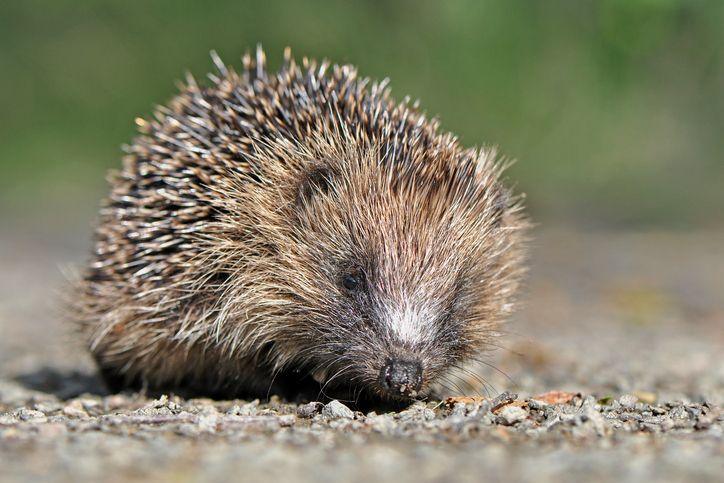 Image source,gettyImage caption,


