Showing posts with label Climate Breakdown. Show all posts

Friday, 7 August 2026

#642: Wildfires

Wildfires are breaking out across Europe.

It's not clear whether most of them started by natural causes.

A report from the House of Lords.

Wildfires are a natural phenomenon and an essential process in some ecosystems. However, around the world climate change, demographic changes and shifts in land use are altering their frequency and severity.

In the UK, natural wildfires, for example those sparked following lightning strikes, are rare and most wildfires are the result of human action. The National Fire Chiefs Council (NFCC), which represents fire and rescue services (FRS) across the UK (44 in England, three in Wales and one each in Scotland and Northern Ireland), notes that most wildfires nationally originate from human activity such as:

  • littering (from improper disposal of a cigarette to dropping litter such as reflective items and glass bottles that then start a fire)
  • unattended fires (campfires, bonfires and barbecues left unattended or not fully extinguished)
  • deliberate fire-setting
  • controlled burning used to manage land that then gets out of control

There is no single definition of what constitutes a wildfire in the UK, with different definitions used by government agencies, the media and FRS. 

The UK government used to define a wildfire as any “unplanned and uncontrolled fire(s) in the natural environment”, but now defines the term to mean an “uncontrolled fire that burns vegetation, such as grass, heather, woodland, crops and scrubland”.

The NFCC maintains that not all outdoor fires are wildfires. Instead, it defines a wildfire as “any uncontrolled vegetation fire which requires a decision, or action, regarding suppression”. In addition, the NFCC specifies that a wildfire will meet one or more of the following criteria:

  • involves a geographical area of at least one hectare (10,000 square metres)
  • has a sustained flame length of more than 1.5 metres
  • requires a committed resource of at least four FRS appliances/resources
  • requires resources to be committed for at least six hours
  • presents a serious threat to life, environment, property and infrastructure
One of the most heartbreaking ones, was relatively local to me, and an area I know well: Dunwich Heath which borders Minsmere RSPB reserve.


"This beautiful purple landscape, once filled with the sound of warblers and skylarks and people enjoying a walk through the heather, is now unrecognisable."

Hilary McGrady, director-general of the National Trust


Sunday, 2 August 2026

#641: Losing front gardens

This Conversation article revisits a theme which has been the focus for some fieldwork in the past in Ely. I've blogged about that separately.


People have tended to pave over front gardens and drop the kerb to create off-road parking... which then restricts the available on-road parking, which encourages more people to do the same.

Many modern housing developments prioritise off road parking.

This is increasing urban temperatures as the surfaces absorb and retain more heat, and the lack of vegetation reduces biodiversity.

I have a front garden laid to lawn with some pots by the front door. This makes it low maintenance but retains some elements of green space and a permeable surface for rainfall.

The article references an RHS report from 2025 on the loss of gardening spaces and the inequality of access.

This report found:

  • The average domestic garden is 244 square metres – that’s nine tenths of a tennis court.
  • 19 million trees can be found in Great Britain’s domestic gardens and 50.5 million across all cultivated green space - six times more than London’s entire urban forest.
  • Just 0.15% of domestic garden is artificial lawn but this still accounts for 7.5million square metres while artificial grass across all cultivated green space stands at 18million square metres - more than six times the size of the City of London
  • More than a third (35%) of domestic gardens comprises lawn, with 25.8% under trees and 11% as flower beds.
  • 42% of domestic garden space is paved over (55% of front garden space and 36% of back garden space), reducing gardens potential to cool, capture pollution, support biodiversity, carbon sequestration and storage, and restricting rainwater absorption by the soil and exacerbating flooding.
To maximise the benefits of cultivated green space and protect them for the future the RHS is urging:
  • Policymakers to guarantee “Space to Grow” in all housing and urban planning, so every household has access to a garden
  • Homeowners to consider robust planting and permeable paving for front garden driveways to help mitigate flood risk and promote the cooling potential of gardens as well as support biodiversity
  • Local councils to ensure diversity in tree planting, prioritising those species that will respond best to climate change
  • Developers to design gardens with water channelling, capture and storage facilities to help future proof them

Gardening is certainly a popular activity, both to do but also to go to see. There were massive queues in the local area where I live due to the RHS Sandringham Show: an expansion on the previous Sandringham Flower Show.

Thursday, 23 July 2026

#633: Europe's soils are drying out...

And that is not good news...


Rivers are running low across Europe, cutting the generation of clean hydropower and restricting cargo ships. The Rhine at Lobith in the Netherlands is now lower than the minimum level seen in the hot summer of 1976. The scientists warned that this disruption could push up the price of food and energy, hitting low-income households hardest.

The original research is here. 

Wednesday, 22 July 2026

#631: Our Broken Planet - now up to ten episodes

The Natural History Museum's Our Broken Planet Podcast has been going for over 2 years now. I posted about it when it had just started, so it's worth revisiting to see what topics have been covered in that time.


The most recent episode looked at what action had been taken about climate change.

Surveys show that most of us are really worried about climate change and we want something to be done. But what?

This series, we’ve explored many ways in which nature is changing in response to human activity and the dangers posed to people and planet as a result. In this final episode, Tori and Khalil explore how people are taking action in the face of the planetary emergency. Along the way, you’ll find out:When has activism been effective?
How do scientists feel about climate change?
One thing everyone can do to start making a positive change

Contributors:Dr Erica McAllister - Senior Curator for Diptera and Siphonaptera (flies and fleas) at the Natural History Museum
Professor Tristram Wyatt - Senior research fellow in the Department of Zoology at the University of Oxford and Honorary Research Fellow at the Centre for Biodiversity and Environment Research
Alessandra Korap Munduruku - Member of the Munduruku group of Sawré Muybu, an indigenous territory in northern Brazil, and President of the Pariri Indigenous Association
Dr Rim Saab - Social psychology lecturer at the University of Sussex, who specialises in the psychology of political action

Wednesday, 16 July 2025

#466: Climate change and nature


The timing of seasonal activity in plants and animals is known as phenology and is collected by a network of volunteers coordinated by the Nature's Calendar citizen science project.

The changing pattern of natural events can have a huge impact. 
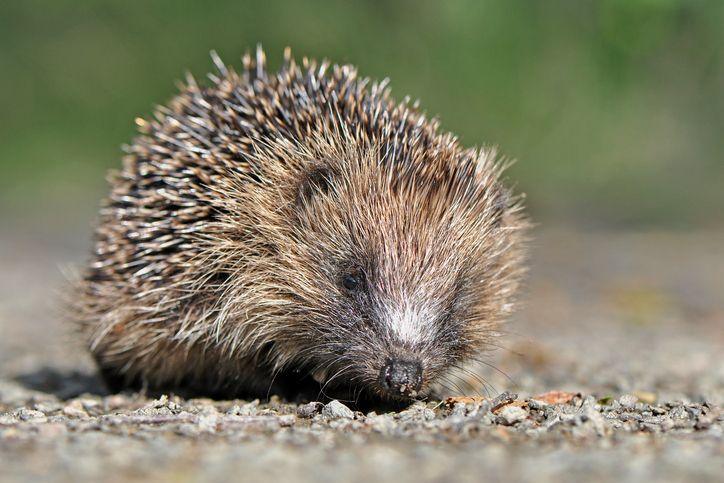
Dormice and hedgehogs – two of the UK's most threatened mammals – are particularly affected when the weather is very warm, for example.

Image source,gettyImage caption,


Hedgehogs - just one of the UK's wild animals that hot weather does not favour

Fruits and nuts ripen earlier in hot weather and that means fewer are available in the autumn when these animals are trying to build up the reserves of fat they need to see them through winter.

At the Alice Holt forest research centre outside London they are investigating how our trees and forests can be made more resilient to the country's future climate.

The sad fact is that many of our current tree species just can't cope, says Dr Gail Atkinson, the head of Climate Change Science at the centre.

"After a drought you can see reduced growth, so trees aren't growing as we would expect them to," she says.

"If you look up in the canopy you can see the leaves looking a little bit raggedy and there are other signs of stress as you're walking through the woodland including extreme examples you might find that the trees have actually died."

Studies at Alice Holt show one species that could do well as the UK continues to get hotter and wetter are coastal redwoods from California. It has been growing trees from different latitudes for the last 60 years to see how they fare in the UK climate.

It means that, in the decades to come, the world's tallest trees could become a common sight here in the UK.


Source: BBC News / State of the Climate Report

Sunday, 29 December 2024

#417: Natural History Reading List #21: Cairn

The latest book by Kathleen Jamie explores the relationship between man and nature as we age. She is the same age as me pretty much, and has reflected on her life and the breakdown in the natural world that she has observed in that time.

Cairn is the new book by the poet and author Kathleen Jamie. In 2021, she was appointed as Scotland's national poet or Makar.

Cairn is a book where she reflects on turning 60 and the changes that have happened to nature in her life, and the challenges to come from the climate breakdown. It is a book made of fragments and stories - each one comprising a stone of the cairn which is built during a life, and which is hopefully 

From the publisher:

Jamie’s intent noticing of the natural world is suffused with a clear-eyed awareness of all we endanger. She considers the future her children face, while recalling her own childhood, and notes the lost innocence in the way we respond to the dramas of nature. With meticulous care, she marks the point she has reached in life and within the cascading crises of our times.

For me, the most wonderful piece of writing in the book comes towards the end in a short piece called 'Erratic'. This is well worth reading and reflecting on.

My copy was published by Sort of Books in 2024

Paperback, 144pp

ISBN: 978-1914502002


Friday, 27 December 2024

#414: The National Trust's Weather and Wildlife Review

This has been getting a lot of coverage today in the news: the charity's annual review.


Each year the Weather and Wildlife Review looks back on how weather has impacted wildlife through the seasons at the places the National Trust looks after.

One in six species in the UK are currently threatened with extinction and we're seeing the impact that the climate crisis is having on both common and rare species.

The review shows that our changing climate has led to the slow loss of predictable weather patterns and how traditional seasonal shifts are causing chaos and confusion for wildlife and people.

The incremental shifts we’re experiencing in terms of our seasons extending may not feel like much in a 12-month period, but over a decade the changes are extremely significant.

Ben McCarthy: National Trust Head of Nature Conservation and Restoration Ecology

With 2024 declared the world’s hottest year on record, it signals a red alert for nature. As global temperatures rise, scientists have previously said that the UK is likely to experience a wetter climate. That reality is now playing out in real time, impacting landscapes, nature and the places we look after. 

Following record-breaking warm years in 2022 and 2023, 2024 was mild and very wet by comparison, with unsettled weather dominating forecasts across the UK in the past 12 months.

2024 has seen record-breaking warm and wet months as well as temperatures see-sawing from one extreme to the other within a matter of days. 

Storms, flooding and multi-hazard weather events bringing snow, rain and wind simultaneously in different pockets of the country have caused destruction and disruption. Unusual sightings in the natural world from across the year also act as warning beacons for what’s happening to our wildlife and seasons. 

Wednesday, 20 November 2024

#401: Climate Action Panel

It's now almost 2 years since I started this blog.

I've just posted the 400th post on the blog, and there is still no sign of the next stage of the process towards adding this qualification as an official additional extra. There needs to be a proper consultation on the draft content of the specification which has been in the making for a while now, and sat on a Minister's desk in the previous government.

Cambridge University Press and Assessment recently hosted a Climate Action Panel event which included Stephen Morgan MP, Minister for Early Education.


The article here describes the event and includes some interesting snippets of information.

Read it to see more...

Saturday, 24 August 2024

#360: A fishy tale

A cross-posting from my Passed the Point of No Return blog.

Back in 1983-4 I had a lecturer on my undergraduate degree course from a wonderful lecturer called Alan Pitkethly. He is fondly remembered by many of his students. 

He would lecture without notes often, sat on the desk, taking us along on a story. One of his lectures was on the idea of the 'Commons' and the changing fortunes of salmon in Canadian rivers.


This Guardian article looks at the decline in migratory fish populations and the impact of human activity.

Tuesday, 6 August 2024

#352: Solastalgia

Solastalgia was mentioned in the Guardian last year in a piece by Damien Gayle.

It's a word I've been familiar with for a while now, as it's a feeling I have had often in the last decade in particular as extreme weather has become more common, and local environments have shown signs of changing, and not always in a good way.

It was used in a piece back in 2016 by Robert MacFarlane who described its origins in the writing of Glenn Albrecht.

The context was the impact of coal mining on the surrounding area.

Solastalgia can be defined as: the “distress produced by environmental change impacting on people while they are directly connected to their home environment”.

On the VeryWell website, there is also a suggestion that:

"When the places that matter most to us—our homes, our lands, and our communities—are disrupted, changed, or threatened, we may also sustain a less visible but no less damaging impact that is carried with us emotionally"

Here's a TED talk with Albrecht talking about the term:


It also points out quite rightly that other cultures have similar words or expressions, and that they probably predate ours given the various despoilation of the world by colonisation...

Solastalgia is not just a first-world concept. Sri Warsini, a researcher at James Cook University in Cairns, Australia is looking into instances of solastalgia that occur in developing countries such as Indonesia, following natural disasters such as volcanic eruptions, finding that the loss of housing, livestock and farmland, and the ongoing danger of living in a disaster-prone area, challenge a person’s sense of place and identity and can lead to depression.

Sunday, 30 June 2024

334: EncounterEdu - a new unit on the Oceans and Climate

EncounterEdu (formerly Digital Explorer) have produced some excellent resources over the years - I know because I wrote some of them back in the day. One of them even won a GA Award.


They have now launched a new free resource.

The resources have been created in collaboration with the team behind the Convex Seascape Survey.

This comprehensive unit aligns with the KS3 geography programme and introduces important aspects of the ocean and science. Topics include the carbon cycle, causes, evidence, and impacts of climate change, ocean biodiversity and its protection, alongside intersections of human and physical geography through mapping, ecosystem services, and coastal livelihoods.

With the ocean covering 70% of the Earth's surface, absorbing over 90% of excess heat from global warming, and the source of livelihoods and food for billions, this unit provides students with an engaging journey into one of the most important issues of the 21st Century.

Here are the 9 units that are included in the unit.


Thursday, 2 May 2024

#299: Turns out nature IS worth something

Last Thursday's Guardian newspaper (this is the best paper for these sorts of stories) has an article on a new report by the Green Finance Institute which warns that further breakdown in the UK’s natural environment could lead to a 12% loss of gross domestic product (GDP) by the 2030s.


It explains how our government's current disregard for nature is going to have drastic consequences.


I will unpick this report a little more once we find out how this links with the proposed specifications. I hope something on the real value of nature is included.

Saturday, 20 April 2024

#293: Our diet and Climate Change

Our food has a dramatic impact on natural history at both local and national scales... and global too...


What we choose to eat has an impact because of the water and energy required to produce certain items, and the amount of land that is put aside for its production.

Food should be more of a priority than it is for the government - as should water... we can get by without most things, but not food and water. 

The original draft specification for the GCSE Natural History mentioned the impact of our diet on the countryside. Choices such as organic food, vegetarian diets and alternatives to milk from cows all have an impact on the landscape...

Image: Jersey Royals, Alan Parkinson - shared under CC license

Friday, 5 April 2024

#276: James Bradley on our collective futures


A powerful piece by James Bradley.

The storm that is upon us will leave nobody untouched. Surviving it demands we build a world that treats everybody — human and non-human — as worthy of life and possibility.


"The anthropologist and philosopher Deborah Bird Rose, who died in 2018, wrote of the impossibility of bridging the gap between our limited ability to affect what is taking place around ourselves and the cost of facing it.

Yet she also recognised that to turn our backs to it was also to turn our backs on ourselves. “To face others is to become a witness, and to experience our incapacity in this position.” It is also an ethical imperative, a way to “remain true to the lives within which ours are entangled, whether or not we can effect great change”."

Monday, 1 April 2024

#271: Tipping points

We are starting to see increasing evidence of what I always taught about when I first started teaching in the 1980s... tipping points being approached or reached where we change some aspect of a physical system into a new state which is irreversible.

This will have a dramatic impact on natural systems, and all life, as our food supply will also be impacted.

The one I always used to talk about was with respect to permafrost, which I used to teach about in the old Cambridge 'A' level, before all the hard physical stuff was taken out...

Visit the Global Tipping Points website to find out more about some of the tipping points.

And here's one on a recent full moon's name and why it may become irrelevant...


The soil is warming earlier... and worms are confused... 

Saturday, 10 February 2024

#234: Meat - warning labels

An interesting piece on the use of warning labels on meat packaging. 

Published on The Conversation website.

Messages such as “smoking kills” and “smoking causes blindness” alongside a graphic image have been legally required on all tobacco products in the UK since 2008.

It will be interesting to see whether any of this sort of activity actually takes place.


Meat consumption is deeply ingrained in Western societies. The United Kingdom is a good example, where according to a recent YouGov poll, 72% of the UK population classify themselves as meat eaters whereas only 7% of Britons classify themselves as either vegetarian or vegan (Dabhade, 2021).

The draft consultation of the specification mentioned the impact of our diet on the planet. This is one of the suggested themes which will be explored. I wonder whether this will survive to the next stage. 

My fear is that anything 'political' or 'meaty' (if you'll forgive the pun) will be removed.

Tuesday, 26 December 2023

#205: Chipping in for nature

You will perhaps have seen the current TV ads for McCain potato products.

Take a look at the company's logo...

Tree... rolling fields and terrain... and some bird in flight. They are trying to position the brand as being connected with the landscape and nature, and perhaps a rising or setting sun for the overall shape of the logo.

McCain was founded by two Canadian brothers in the early 1900s.

They are chipping in and moving over to regenerative / sustainable agriculture use from all their suppliers and this is prominently displayed on the packaging of their products.

When thinking about branding, you can see particular words often appearing on packaging.

Here's their work:

In 2020 they launched the McCain Potato Farmer Pledge, a £25 million investment designed to help ensure the long-term sustainability of British agriculture, in the face of increasing climatic events like droughts and floods. 
Since 2020, they have committed a further £50 million to British farming to safeguard the UK’s potato industry. This includes significant contract price increases for growers, as well as a supplementary energy support package.

As you can see, they are very active in East Anglia.

They also say:

As 80% of all potatoes eaten in the UK are home grown, they don’t need to travel far from the field to the plate, and this kind of local sourcing is great news for the environment. But for food retailers and consumers, local sourcing goes beyond simply decreasing emissions, it also supports hundreds of British farmers and farming communities.

When it comes to our supply chain, quality and traceability are key. 100% of our British potatoes come from certified Red Tractor growers –the UK’s leading farm and quality food production certification, that assures food safety and traceability.

There's plenty of interest in this website

This might make a good example of how decisions made by companies have the potential to have an impact on the countryside. 

Tuesday, 5 December 2023

#196: Valuing city trees

As the world warms, we will need to seek shade on hot days. In cities, this will become even more important. The heat of the summer can be deadly.


Cities which value the well being of their inhabitants should start planting now... and on a large scale.

They will also protect existing city trees. Manchester calls itself the City of Trees.

City trees can also be the focus for some fieldwork. They can be counted, identified and mapped.

Also check out the work of Trees for Cities. This organisation is currently celebrating its 30th anniversary.

Image: Casa de Campo, Madrid - Alan Parkinson, shared under CC license

#707: A requiem for Sycamore Gap

Robert MacFarlane has finished work on “The World Tree”, the libretto for a long choral work originally inspired by the felling of the Syca...