Hamza's enthusiasm would make him perfect for this role, and he is going on tour in 2027.

A blog providing ideas and resources for those teachers hoping to teach the new GCSE Specification, first announced in April 2022. Draft subject content released for consultation in June 2026 - for first teaching from 2028 or 2029.

Bringing together leading experts and dedicated educators, the Collaborative offers seven focused sessions designed to deepen your practice and broaden your impact:
Rooted in the latest research, the Collaborative foregrounds hope, solution-focused thinking, and emotional awareness — equipping teachers with practical strategies that carry directly into classrooms, schools, and communities.
The two days include a dinner at Trinity College, Oxford, lunch on Friday, and time at the historic Museum of Natural History — making this as much a celebration of Oxford’s intellectual and cultural life as it is a professional learning experience.
A cross posting with my World of Music blog.
There are a few locations where the labours of people from prehistory can still be seen.
The idea of following the story of human impact on natural history is part of the draft specification and one would assume it might follow through into the next iteration of the specification as one of the particular aspects of the new qualification.
Historic Environment Scotland (HES) is apparently considering charging to access some of the more well known locations they manage, including the stones of Callanish / Callanais on the Isle of Harris/Lewis. I visited many years ago.
One programme which is behind the increased interest in the area is a time-travel fantasy called 'Outlander'. This has proved very popular.
Cruise ships can arrive at some of these fragile locations in large numbers, which adds additional pressures onto fragile environments.
This album was recorded by the New Zealand musician Jon Mark in 1988 and is named after the ring at Callanish.
It's always good to have Springwatch back... although that means another spring from the ones that I have left to see...
This time round the team are in Northern Ireland.
Last night's episode was a good opener, and you can see them on BBC and iPlayer. You can keep up with the action on the live wildlife cameras too.

Michael Sheen has narrated a new film on climate change.
A cross posting from my Passed the Point of No Return blog.
This story came through via the BBC News Norfolk page.
It's about a film which was filmed on the West Acre estate, a few miles from where I live.
It was written in collaboration with young farmers and it questions why discussions about the weather are so common, in contrast to discussions about climate change.
The Otter Valley Association was founded in 1979.


It is also available to purchase in paperback and hardback, or loan from your local library.
If you haven't already got a copy then it may be worth going for the illustrated version which has some wonderful images of fungi.
A film of the book has also been made, with narration by Björk.
Ben Hennig has produced a range of maps on the Worldmapper website and also on his own blog.
Some of them are animated.
Nature's heartbeat visualises the Earth "breathing in and out" through the year.

See the cartogram here (PDF download) from Geographical magazine.
A cross-posting from my GeoLibrary blog, which currently features over 700 books.

There are lots of excellent photographs, mostly taken by the authors themselves, who have certainly put in the legwork and mileage to cover the region they are writing about.
Publisher's description:
This book showcases the natural history and landscape of the Fens, an area now responsible for a third of Britain’s food production and worth over £3 billion to the economy every year. It describes the geology and geography across the Fenland Basin over the last 14,000 years, a period dominated by the flux of wetlands and movement of water. The human relationship with this landscape is traced through history: from Mesolithic hunters to the prosperity of a medieval economy based on the currency of eels, through the taming and draining of the vast wetlands, to modern farming on an industrial scale.It's written by two local authors who really know their local patch well. A great coffee table / browsing book.
It sits nicely with my other Fenland books - dipped into to inform my teaching about the local area.
My copy was published by Pelagic Publishing.
Paperback, 376pp
ISBN: 9781784274108
I am fortunate enough to live close to the North Norfolk coast. I used to live on the coast itself at Snettisham for 12 years which allowed me to cycle to the beach.
On the edge of the village is Ken Hill, which has latterly become a venue for Springwatch and a regenerative farm.

The Deepdale Podcast is now live, and there are several posts which would be of interest.

I have a signed copy of his previous book: 'The Natural Explorer'
This book explores what a tree can tell us about the landscape. It says a great deal about the value of trees and how they interact with the soil, atmosphere, weather and biodiversity. They influence the drainage and fertility of the soil, and can also tell us a lot about where we are, and how the landscape is changing.
The loss of a tree can touch millions, as we saw with the felling of the Sycamore Gap tree.
It would make a useful book to add to the library for those who are considering work in local woodlands for fieldwork. We are still waiting to see to what extent woodlands are featured in the final specification.
My thinking would be that the final specification would involve students investigating a range of ecosystems and the value of a tree is something which students should certainly be asked to consider, perhaps when thinking about the wider 'value' of nature in our lives and landscapes.
Published by Hodder Press
Paperback, 320pp
ISBN: 978-1529339628
I'm currently reading Nicholas Crane's new book on the history of Britain's footpaths: how they came about originally following the drowning of Doggerland, and were then refined by successive waves of change: horses, the Roman invasion etc. It's a dense and scholarly work, with plenty of points of interest and relevance to geographers exploring the connections between people and the landscape.

On David Attenborough's 100th birthday.
Rewilding Britain is an organisation which is aiming to rewild large parts of the country .
What is rewilding?
Where do your old clothes to to? You might be surprised.
A BBC Assignment programme explores a clothing graveyard which started to develop outside the town of Alto Hospicio in northern Chile, in the Atacama Desert.

Available on BBC Sounds.
Chile’s Atacama Desert is one of the driest places on earth – often likened to Mars. It’s also home to piles of dumped clothes from fast fashion labels across the world. Because it’s so dry nothing decomposes. And that means that clothes ditched 10 to 20 years ago still look recognisable. Sometimes the mountains of clothes are burnt causing toxic fumes which harm the local community of Alto Hospicio.A lovely song by the progressive rock band: Big Big Train.
The closing track on their 2012 album 'English Electric Part One' which really grew their audience.
One resource that may be used when preparing to teach the GCSE Natural History will be webcams or streams which show wildlife and environments. I can imagine creating a wall of webcams.
The Norfolk Wildlife Trust has shared a new live webcam of an osprey pair who successfully fledged two chicks at NWT Ranworth Broad and Marshes in 2025, making the nature reserve the first known site in the region to make a home for breeding osprey in hundreds of years.
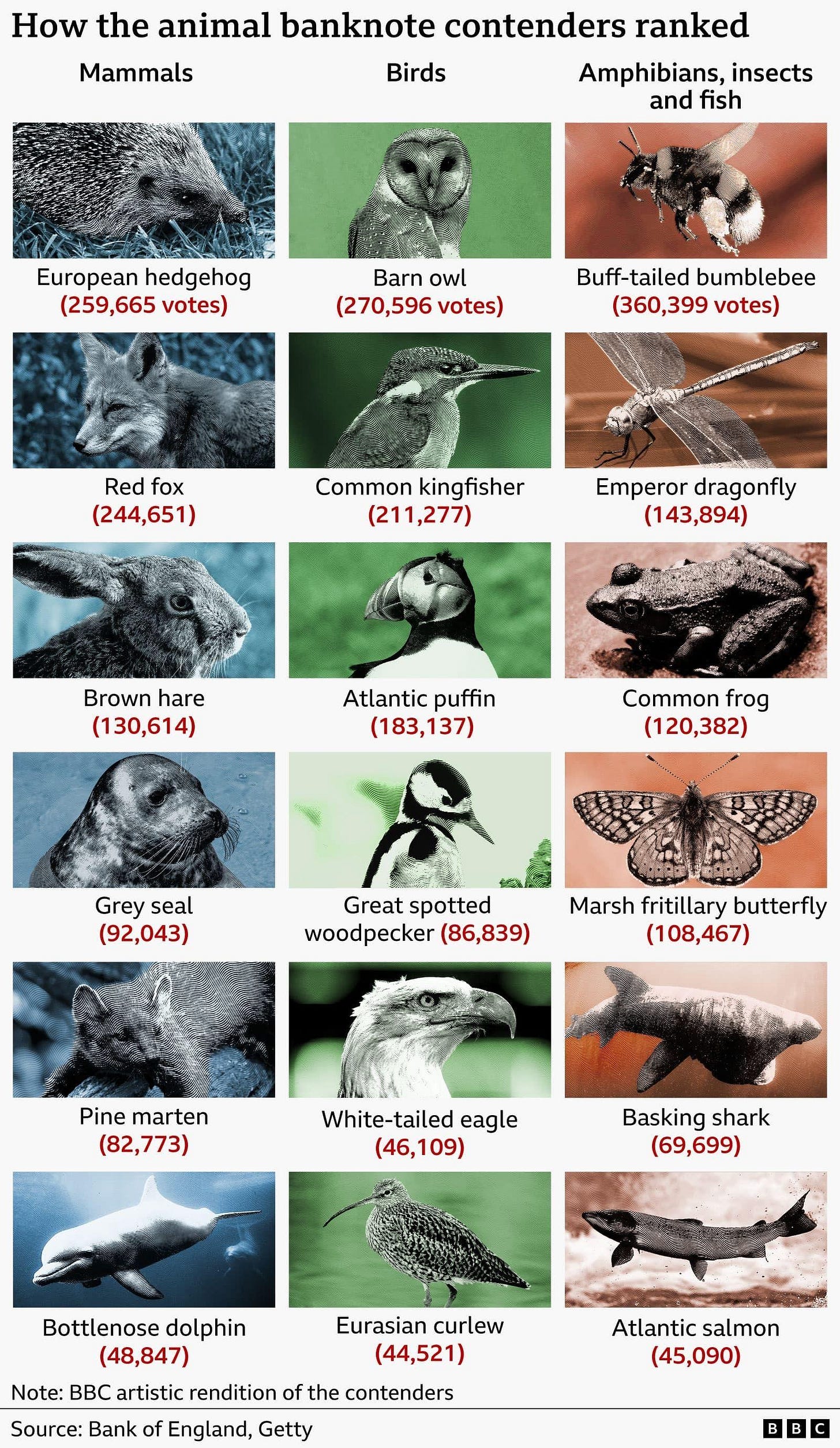
Just before the birds returned this spring, NWT carefully installed a wildlife camera that offers views into the nest the pair used in 2025, which will be streamed online thanks to support from NWT corporate partners, MelBek.Following a public vote, which attracted over 2 million votes in total, four animals have been selected to appear on English banknotes. The ...