Showing posts with label Climate Change. Show all posts

Thursday, 13 August 2026

#645: The RMetS Consultation on the GCSE Natural History

The RMetS has shared their thoughts on the GCSE Natural History ahead of the closing of the consultation on the proposed subject content.


Although the draft revised science and geography subject contents are not expected to be published within the consultation period of this GCSE, we anticipate that climate change education will be strengthened in both subject areas. 

Therefore, it is important that that Natural History GCSE builds on, rather than duplicates, learning in those subjects.

To this end, we recommend that the Natural History GCSE subject content should specifically develop systematic understanding of the interactions between weather, climate and climate change and the natural world, through an understanding of:

  • How climate determines biomes.
  • The interaction of extreme weather (including extremes of rainfall and temperature) and weather-related hazards (such as floods, droughts and fires) with habitats and species.
  • The impact of current and projected climate change as well as climate mitigation solutions with habitats and species and how negative impacts can be reduced or avoided.
  • The role of the natural world in the climate system, including the role of nature-based solutions (adaptation and mitigation) to climate change.
It is also important to clearly delineate the natural processes that controlled the interrelationship between weather, climate and climate change and the natural world before the Anthropocene, and the more recent human ones.

We support the inclusion of fieldwork and observation in the proposed content and recommend that this includes simple weather observations or measurements.

We support the broad range of data skills included but recommend that wider skills such as critical evaluation are also included.

Wednesday, 22 July 2026

#631: Our Broken Planet - now up to ten episodes

The Natural History Museum's Our Broken Planet Podcast has been going for over 2 years now. I posted about it when it had just started, so it's worth revisiting to see what topics have been covered in that time.


The most recent episode looked at what action had been taken about climate change.

Surveys show that most of us are really worried about climate change and we want something to be done. But what?

This series, we’ve explored many ways in which nature is changing in response to human activity and the dangers posed to people and planet as a result. In this final episode, Tori and Khalil explore how people are taking action in the face of the planetary emergency. Along the way, you’ll find out:When has activism been effective?
How do scientists feel about climate change?
One thing everyone can do to start making a positive change

Contributors:Dr Erica McAllister - Senior Curator for Diptera and Siphonaptera (flies and fleas) at the Natural History Museum
Professor Tristram Wyatt - Senior research fellow in the Department of Zoology at the University of Oxford and Honorary Research Fellow at the Centre for Biodiversity and Environment Research
Alessandra Korap Munduruku - Member of the Munduruku group of Sawré Muybu, an indigenous territory in northern Brazil, and President of the Pariri Indigenous Association
Dr Rim Saab - Social psychology lecturer at the University of Sussex, who specialises in the psychology of political action

Monday, 13 July 2026

#614: Carbon Cycle piece from Professor Sylvia Knight

Via LinkedIn.

I'm delighted that my Solutions-Focussed Climate Education article has appeared in this month's edition of The Association for Science Education's School Science Review and is open access.


Access it here (PDF download)


Inspired by a recent post by Katharine Hayhoe, the article uses simplified carbon cycle diagrams to explore various climate change adaptation and mitigation options, with clear links to the science (and maybe future Natural History GCSE?) curriculum.

Thursday, 28 May 2026

#586: Oxford Education Deanery - a CPD opportunity


The Oxford Education Deanery Climate & Nature Collaborative is a two-day professional development course for school teachers, based at the University of Oxford’s Department of Education.

Bringing together leading experts and dedicated educators, the Collaborative offers seven focused sessions designed to deepen your practice and broaden your impact:

  • Natural history approaches, including a session at Oxford’s Museum of Natural History
  • Cross-curricular frameworks with an expert from the UCL Centre for Climate Change and Sustainability Education
  • Research-informed pedagogies for climate and nature education
  • Climate emotions and student well-being
  • Student voices in climate and nature education
  • Subject-specific working groups, culminating in a showcase of participants’ projects and ideas
  • Oxford’s leading Net Zero research and what it means for the classroom

Rooted in the latest research, the Collaborative foregrounds hope, solution-focused thinking, and emotional awareness — equipping teachers with practical strategies that carry directly into classrooms, schools, and communities.

The two days include a dinner at Trinity College, Oxford, lunch on Friday, and time at the historic Museum of Natural History — making this as much a celebration of Oxford’s intellectual and cultural life as it is a professional learning experience.

Booking, programme and all the details here.

Tuesday, 26 May 2026

#583: New Climate Change film

Michael Sheen has narrated a new film on climate change.

A cross posting from my Passed the Point of No Return blog.

This story came through via the BBC News Norfolk page.

It's about a film which was filmed on the West Acre estate, a few miles from where I live.

It was written in collaboration with young farmers and it questions why discussions about the weather are so common, in contrast to discussions about climate change.

Environmental campaign group the Climate Majority Project hopes the five-minute film will help pupils and teachers speak "honestly and sensitively" about the issue.

It was written by King's Lynn-born playwright Emma-Louise Howell, who spent time speaking to young farmers in the county about their experience of climate change.

She said: "They really were engaged in it and they were almost shouting into a void saying 'we have got a bit of an answer, working with nature'.

"You can't control the weather, but they are having to adjust every single day to the shift in climate.

"It's not conceptual to them."


The film is narrated by Michael Sheen, who lends his distinctive voice to the film.


In the past 6 hours, 94% of Brits have spoken about the weather.

In the past 5 years, 7000 Brits have been arrested for speaking out about the climate crisis.

Now we’re asking: how can we change small-talk into a conversation for meaningful change?


Watch the film here:


Saturday, 10 January 2026

#545: Natural History Reading List #24: 'Shifting Sands'

The subtitle of the book is 'A Human History of the Sahara' and the author has personal experience of living in the region, whose name comes from some local terms.

It's one of the best books I read last year.

The indigenous populations would never use the term 'Sahara', as they refer to smaller sub-regions with which they are familiar. They will generally have quite specialist knowledge of particular areas and the routes between trading posts.

They used words that described the empty, dangerous, inhospitable nature of the region, some of which were then appropriated for the actual place names for desert areas

There is also plenty of insight. Jay Owens' book 'Dust' has previously explored the many geographical aspects that can be obtained from exploring the desert sands.

A large part of the desert is made of hamada or desert pavement, or stony ground, and sand dunes are relatively rare.

The Natural History of deserts will not be a main area of the GCSE Natural History, which will focus particularly on UK based ecosystems and nature, but the way that nature can survive and people can thrive in such challenging environments is worth exploring. 

The other aspect of the book is that the desert hasn't always been a desert - it used to be woodland, but climate change resulted in a change in the landscape of the whole region.

This book has been really fascinating and increased my knowledge of deserts a great deal. It is the additional human context which has made all the difference, and the way that it is put together is authentic and authoritative.

There is plenty on the desert as it is today, and its challenges.

My copy was published by Profile Books in 2025.

Hardback,  374pp

ISBN: 987-1-788166454

An audiobook preview is here. Those with Spotify Premium can listen to the book too.


This area is one where once again indigenous knowledge is coming to the fore.

Monday, 17 November 2025

#519: Beanz meanz

This BBC News story from 2023 talks about a successful haricot bean harvest in Lincolnshire.

Baked Beans from companies such as Heinz are generally imported as the beans haven't traditionally done well in the UK.


In 2025 we also had rice successfully grown...

In the future we may see a very different English countryside to the one we have become used to seeing.

Thursday, 11 September 2025

#492: Climate Change in the Curriculum

The Geographical Association has worked with the Council for Subject Associations, UCL’s Centre for Climate Change and Sustainability Education, and other partners, to develop the following statement that highlights geography’s distinctive contribution to climate change and sustainability education in the publication, 

The key contributions of subjects to climate change and nature education: a curriculum policy proposal.

‘Geography is a curriculum heartland for climate education, sustainability and green skills from Early Years to A level. Its distinctive approach focuses on the interactions and interdependencies between people and their environment and develops the skills young people will need in order to understand, adapt to and mitigate against a changing climate. Geographical fieldwork also provides them with first-hand experiences of nature and landscapes. In this way, geography enables young people to better understand how and why our climate is changing, how this will impact and transform our economy, society and environment – locally, nationally and globally – and what can be done about it.’

Download the statement from UCL.

Reference

Kitson, A., Phillips, M. & Dillon, J. (2025). The key contributions of subjects to climate change and nature education: a curriculum policy proposal. 

Available from September 2025 at www.climateeducation.org.uk

What part will the GCSE Natural History potentially play in this area of the curriculum? One would hope it would have sustainability and climate change at its heart.

Wednesday, 16 July 2025

#466: Climate change and nature


The timing of seasonal activity in plants and animals is known as phenology and is collected by a network of volunteers coordinated by the Nature's Calendar citizen science project.

The changing pattern of natural events can have a huge impact. 
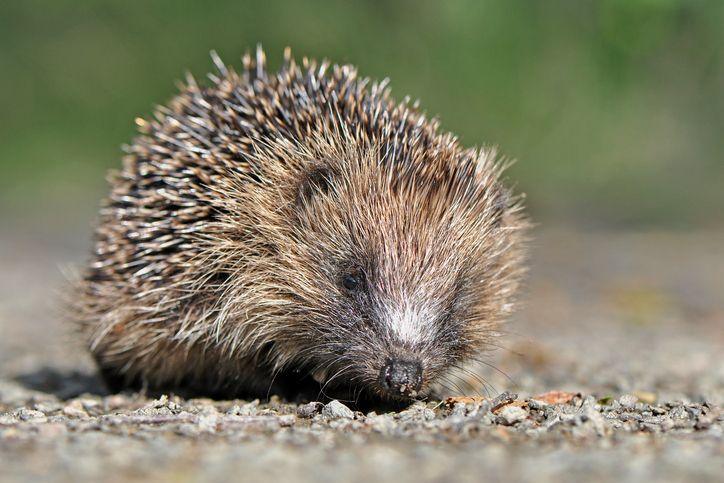
Dormice and hedgehogs – two of the UK's most threatened mammals – are particularly affected when the weather is very warm, for example.

Image source,gettyImage caption,


Hedgehogs - just one of the UK's wild animals that hot weather does not favour

Fruits and nuts ripen earlier in hot weather and that means fewer are available in the autumn when these animals are trying to build up the reserves of fat they need to see them through winter.

At the Alice Holt forest research centre outside London they are investigating how our trees and forests can be made more resilient to the country's future climate.

The sad fact is that many of our current tree species just can't cope, says Dr Gail Atkinson, the head of Climate Change Science at the centre.

"After a drought you can see reduced growth, so trees aren't growing as we would expect them to," she says.

"If you look up in the canopy you can see the leaves looking a little bit raggedy and there are other signs of stress as you're walking through the woodland including extreme examples you might find that the trees have actually died."

Studies at Alice Holt show one species that could do well as the UK continues to get hotter and wetter are coastal redwoods from California. It has been growing trees from different latitudes for the last 60 years to see how they fare in the UK climate.

It means that, in the decades to come, the world's tallest trees could become a common sight here in the UK.


Source: BBC News / State of the Climate Report

Friday, 9 August 2024

#354: Saltmarshes

An interesting piece in Geographical magazine looked at the vital role that saltmarshes will play in mitigating sea level rise caused by Climate change.

I am fortunate to live in Norfolk and can be at a salt marsh within 25 minutes of leaving my home. They are wonderful places and last month came into bloom with sea lavender and other plants cloaking them in colour.


You can find their locations using the MAGIC application which I have blogged about here separately.

Image: Flowering plants on salt marsh in Norfolk, by Alan Parkinson, shared under CC license.

Sunday, 30 June 2024

334: EncounterEdu - a new unit on the Oceans and Climate

EncounterEdu (formerly Digital Explorer) have produced some excellent resources over the years - I know because I wrote some of them back in the day. One of them even won a GA Award.


They have now launched a new free resource.

The resources have been created in collaboration with the team behind the Convex Seascape Survey.

This comprehensive unit aligns with the KS3 geography programme and introduces important aspects of the ocean and science. Topics include the carbon cycle, causes, evidence, and impacts of climate change, ocean biodiversity and its protection, alongside intersections of human and physical geography through mapping, ecosystem services, and coastal livelihoods.

With the ocean covering 70% of the Earth's surface, absorbing over 90% of excess heat from global warming, and the source of livelihoods and food for billions, this unit provides students with an engaging journey into one of the most important issues of the 21st Century.

Here are the 9 units that are included in the unit.


Thursday, 23 May 2024

#316: Climate Change and Natural History

Many museum collections are being revisited to see what they can tell us about the past, and also what they previously neglected to tell us. Collections and their use will be part of the new draft specification, and visits to suitable places are likely to be an important part of the preparation that teachers do for their teaching.

This article looks at the work being done at the Natural History Museum to explore evidence of past climate change.


They have a huge collection, and much work needs to be done to revisit it and reinterpret some of the collections.

Saturday, 20 April 2024

#293: Our diet and Climate Change

Our food has a dramatic impact on natural history at both local and national scales... and global too...


What we choose to eat has an impact because of the water and energy required to produce certain items, and the amount of land that is put aside for its production.

Food should be more of a priority than it is for the government - as should water... we can get by without most things, but not food and water. 

The original draft specification for the GCSE Natural History mentioned the impact of our diet on the countryside. Choices such as organic food, vegetarian diets and alternatives to milk from cows all have an impact on the landscape...

Image: Jersey Royals, Alan Parkinson - shared under CC license

Monday, 1 April 2024

#271: Tipping points

We are starting to see increasing evidence of what I always taught about when I first started teaching in the 1980s... tipping points being approached or reached where we change some aspect of a physical system into a new state which is irreversible.

This will have a dramatic impact on natural systems, and all life, as our food supply will also be impacted.

The one I always used to talk about was with respect to permafrost, which I used to teach about in the old Cambridge 'A' level, before all the hard physical stuff was taken out...

Visit the Global Tipping Points website to find out more about some of the tipping points.

And here's one on a recent full moon's name and why it may become irrelevant...


The soil is warming earlier... and worms are confused... 

Wednesday, 13 March 2024

#263: Giants are flourishing

An interesting story on the BBC today about the giant redwooods that were planted in a number of locations to add to arboretums or woodlands in the grounds of stately homes, and which are now flourishing in the UK's climate. 

They were brought over by the Victorians, along with a range of other plants which were introduced at this time to ornamental gardens.

It was interesting to see that there are now more of the trees here in the UK than are left in California. 

As they are no older than 160 years, does that make them part of our natural history now? They are non-native species of course.

The research article also refers to the carbon sequestration potential of the trees.

Disney, Mathias et al. (2023). Data for: UK redwoods terrestrial laser scanner point clouds [Dataset]. Dryad. https://doi.org/10.5061/dryad.ttdz08m3n

Giant redwoods (Sequoiadendron giganteum) are some of the UK’s largest trees, despite only being introduced in the mid-19th century. Given recent interest in planting redwoods in the UK, partly due to their carbon sequestration potential and also their undoubted public appeal, an understanding of their viability is important.

Sunday, 11 February 2024

#235: NatureScot website

The NatureScot website is worth a visit. There is plenty of interest here on the work of Scotland's Nature Agency.


There is a useful Information Hub.

This includes a set of Podcasts on the theme of Making Space for Nature.

There are also sections on Climate Change, Landforms and Geology, Landscapes and Habitats and  Platnts, animals and fungi.

Friday, 23 June 2023

#44: Climate Change Insights report from the ONS

The Office for National Statistics produces a quarterly report which provides the results of surveys which they have carried out with a healthy number of respondents. 

One was published in May 2023 which may be of interest and relevance to those who are exploring the impacts of the climate emergency on the natural world. 


Almost two-thirds (64%) of adults in Great Britain said they were worried (somewhat or very) about the impact of climate change in the past 12 months.

Of those who said they were worried, around three-quarters (74%) said that they were concerned about the impact on future generations; this was highest among those aged 70 years and over (83%).

The most recent decade, 2013 to 2022, has seen an increase of 26% in the annual average number of summer days and a 16% decrease in icing days (days where the air temperature does not go above freezing) in the UK compared with the 1991 to 2020 average.


Charts can also be obtained from the report's page.

#707: A requiem for Sycamore Gap

Robert MacFarlane has finished work on “The World Tree”, the libretto for a long choral work originally inspired by the felling of the Syca...